





Most of us want the same thing when we walk into a room.
We want to feel like we belong there. Like the space was made with us in mind. Like we don’t have to shrink ourselves, explain ourselves, or prove that we deserve to be there.
In Canada, we like to think of ourselves as welcoming. We point to our diversity, to our Charter, to the stories we tell about being kinder or more tolerant than other places. And in many ways, things have changed. The laws on the books are not what they once were. There are Black faces in places where, not so long ago, Black people were not allowed or expected to be.
And yet, for many Black people in Canada, the feeling of not quite belonging is still very familiar.
It shows up in the stare that lingers a bit too long in a store. In the teacher who is quick to see a “behaviour issue” in a Black child and “potential” in a White one. In the job interview where you’re never quite sure whether “not a good fit” means “not what we pictured when we imagined success.”
We see it in the numbers too: in who is more likely to be stopped by police, who ends up in front of a judge, who gets access to timely health care, who is believed when they say they’re in distress. The details change, the headlines change, but the pattern feels stubbornly familiar.
If things are supposedly “better now,” why does this keep happening?
That’s the question at the heart of this article. It’s a question echoed by Black children and youth, by parents, by elders who have seen many cycles of “progress” and disappointment.
On paper, we move forward. In practice, anti-Black racism has a way of reappearing in new forms, in new systems, in new language. A school desegregates, but Black students are still streamed away from advanced classes. A company launches a diversity initiative, but the culture quietly punishes people who speak up. A country celebrates Black History Month, but hesitates to talk honestly about its own role in anti-Black racism.
From a psychological point of view, what’s going on?
Psychology is supposed to be the science of how people think, feel, and behave. It has tools to help us understand why we cling to certain stories about ourselves, why we resist seeing unfairness, and why changing rules on paper is not the same as changing hearts, habits, and power. Psychology also has a growing body of work, much of it led by Black scholars and communities, that speaks directly to the mental health impacts of racism, and to the strength and creativity Black people draw on to survive and thrive.
At the same time, psychology has not been a neutral observer in all of this. It has been used to justify exclusion and inequality, and it has often centered White experiences as the norm. Black people in Canada have, for much of their history, been studied far more than they have been listened to.
Rather than retelling Black history only through stories of pain, we will start from Black brilliance and Black persistence in Canada. We will look underneath those stories at the unwritten rules that told them they didn’t belong, and at the communities that insisted otherwise.
Then, we will use a psychological lens - in particular, a lens on how those in power see themselves and protect their comfort - to help explain why, even when the surface changes, those unwritten rules keep popping back up. Why we can have new laws and still feel old patterns. Why some people feel personally attacked by the very idea of talking about racism. Why “we’re all equal now” can be such a comforting story, even when the evidence says otherwise.
Finally, we will highlight Black psychology in Canada: Black psychologists, researchers, and communities who are naming these patterns, caring for those who are hurt by them, and imagining something better. And we want to ask what it would take, not just in words, but in practice, for Black people to truly belong in Canadian psychology and in Canadian life.
This is not a story about individual villains and heroes. It’s a story about how systems teach us what is “normal,” whose feelings matter, and whose experiences are dismissed. It’s about how those lessons get cemented into our minds and our institutions. And it’s about how, together, we can unlearn them.
If we are serious about honouring Black history in Canada and about building a different future, we have to be willing to look closely at why racism keeps coming back, and to listen carefully to the people who have been living with its consequences the longest.
Psychology has a role to play in that work. So does Black psychology. The question is whether we are ready to use what we know.
Black brilliance has always been here
When we talk about anti-Black racism, it can be easy for the story to collapse into only pain, only barriers, only harm. But that has never been the whole story.
From the very beginning, Black people in what is now Canada have been building, teaching, organizing, running businesses, raising families, and imagining better futures, even when the rules of the day were written to keep them out.
Take Mary Bibb.
Mary was a teacher, a journalist, and an abolitionist. She and her husband Henry settled in what is now Windsor, Ontario, in the 1850s, as thousands of Black refugees were fleeing enslavement in the United States and making their way to Canada. They arrived in a place where Black children were often turned away from local schools or shunted into inferior options. The message was clear: your children do not belong in the same classrooms, with the same resources, as White children.
Mary’s response was a refusal to accept that message. She decided instead to help build something different.
She helped found schools for Black children and adults in the community, and she used her skills as a writer and editor to co-create The Voice of the Fugitive, a newspaper that shared news, offered advice, and helped new arrivals find their footing. Her work was part education, part community-building, part therapy session in print: a way of telling people who had lost so much that they were not alone, and that their lives and stories mattered.
Psychologically, those choices matter. When a system tells children, “You are an afterthought,” opening a school that says, “You are worth investing in” is not just a logistical fix, but also a deep act of repair. It sends a different message about who is worthy of care, of learning, of a future.
Almost a century later, on the other side of the country, another Black woman was sending a similar message in a very different way.
Viola Desmond was a successful business owner and beautician in Nova Scotia. She ran a beauty school that trained and mentored young Black women, preparing them to start businesses of their own at a time when very few doors were open to them. Her daily work was about dignity: helping Black women see themselves as worthy of attention, skill, and investment.
In 1946, when her car broke down in the town of New Glasgow, Viola decided to pass the time by seeing a movie at the local theatre. She bought a ticket and sat on the main floor, close to the screen. What she soon discovered was that the theatre had an unwritten rule: Black patrons were expected to sit in the balcony.
When she refused to move, she was dragged out of the theatre, arrested, and charged - not with breaking a segregation law (there wasn’t one on the books), but with a minor tax offence. The state found a technical excuse to punish her for sitting where she wasn’t “supposed” to sit.
Again, the message was clear: you may run a business, you may train others, you may pay for your ticket, but you still do not belong in certain spaces. No matter what the law says, we can still find ways to exclude you.
And again, the response was a refusal to accept that message. Viola and her supporters chose to fight the charge, to talk publicly about what had happened, and to challenge the quiet, “unofficial” segregation that many people preferred not to see. Her act of refusal, and the legal cases that followed, would later be recognized as a key moment in Canada’s civil rights history.
Mary Bibb and Viola Desmond lived in different centuries, in different parts of the country, under different sets of laws. But their stories rhyme.
In both cases, Black women were already doing the work of building community, education, beauty, and possibility. In both cases, they ran up against rules, formal and informal, that tried to push them, their students, and their communities back to the margins. And in both cases, they pushed back.
If we look at these stories only as tales of individual courage, we miss something important.
We miss how deeply questions of belonging are woven into our systems:
- Who is a “proper” student, client, customer, or citizen?
- Who is allowed to take up space in a classroom, a business, or a theatre?
- Whose comfort is protected, and whose discomfort is ignored?
Mary Bibb’s schools and newspaper were answers to a world that said Black children’s minds did not matter as much. Viola Desmond’s business and her decision to stay in her seat were answers to a world that said Black women could do the work but still had to know “their place.”
From a psychological perspective, these are not just historic anecdotes. They are early case studies in something we still see today: Black brilliance shining in environments that send mixed messages about whether that brilliance truly belongs.
We’ll keep these stories in mind as we turn to the “underneath”: the beliefs, habits, and unwritten rules that allow racism to survive even after the laws change, and to the ways Black psychology in Canada is helping us name those patterns and imagine something better.
What’s happening underneath?
When we look at stories like Mary Bibb’s and Viola Desmond’s, it’s tempting to file them away under “bad things that happened a long time ago.”
The laws have changed. The signs are gone. We don’t have “Whites Only” on theatre seats or “Coloured” entrances on school doors. So why do the patterns feel so familiar?
From a psychological point of view, there are some common threads running underneath these moments that are still with us today.
Who counts as “normal”
In both Mary’s time and Viola’s, there was an unspoken assumption about who Canada was “for.”
The default image of a “normal” citizen, student, customer, or professional was White. Black people could be present, but we were often treated as exceptions, as visitors, or as problems to be managed.
That kind of assumption doesn’t always show up in official rules. It shows up in:
- who people imagine when they say “Canadian”
- whose names are on the buildings
- whose faces we see in positions of leadership,
- who teachers subconsciously expect to excel
When you’re part of the group that’s seen as “normal,” you don’t usually have to think about it. The world quietly fits you. Your accent, your hair, your diet, your holidays, your family story all feel unremarkable.
When you’re not part of that group, you’re constantly reminded, sometimes loudly, sometimes in tiny ways, that you’re being measured against someone else’s idea of what “fits.”
Those unwritten rules about who is “normal” are powerful. They shape how policies are written, how decisions are made, and how people are treated, often without anyone saying a word.
Fear of losing something
Any time people who have been pushed to the margins start to step forward - demanding equal access to schools, jobs, housing, public spaces - those in the “normal” group can feel like something is being taken away from them.
Even if nothing concrete is lost, the feeling of being challenged can be uncomfortable. Questions like:
- “If they move in here, will our neighbourhood change?”
- “If they get this job, what does that mean for me?”
- “If we talk about racism, does that mean I’m being called a racist?”
However, pushing for equality isn’t the same as seeking revenge. Welcoming more people in doesn’t mean less value for those who were here before.
But our minds are very quick to turn discomfort into stories. And those stories can sound like:
- “We’re going too far.”
- “People are too sensitive now.”
- “Everything is about race these days.”
Over time, those stories can justify rolling back programs, ignoring concerns, or doubling down on old habits, while insisting that “this isn’t about race.”
The stories we tell about fairness
Most of us like to see ourselves as fair, decent people living in a fair, decent country. That’s part of our national story.
So when evidence of racism appears, when we see disproportionate stops by police, or school discipline that falls harder on Black kids, or stories of discrimination in hiring, it creates a kind of tension inside.
Two things can’t both be true at once:
- “We are fair and racism is mostly over,” and
- “Black people are still being treated unfairly because of race.”
To ease that tension, it’s often easier to question the evidence than to question the story. So we hear:
- “Are you sure that was about race?”
- “Maybe they just misunderstood.”
- “That was a different time.”
- “We’re better than other countries, aren’t we?”
These aren’t just individual excuses. They’re psychological shields. They protect our view of ourselves and our institutions - but at a cost. They make it harder to see patterns, to listen fully to Black experiences, and to make changes that go beyond surface fixes.
Old rules in new clothing
Even when we change the written rules, the old unwritten ones have a way of slipping through.
We see it when:
- schools that no longer segregate by race still stream Black students out of advanced courses
- workplaces that publicly celebrate diversity still reward those who “don’t rock the boat”
- health systems that promise equal access still end up doubting Black patients’ pain or dismissing their concerns
No one is hanging new “Whites Only” signs. But the effect can feel hauntingly familiar.
Part of the reason is that systems have habits. Policies and practices get built over decades, usually without Black people in the room. Those habits then get passed down, defended as “the way we’ve always done it,” and applied as if they are neutral, even when they aren’t.
Psychology helps us see that this isn’t just about individual “bad apples.” It’s about:
- the comfort of being seen as “normal”
- the fear of losing status
- the stories we cling to about being fair
- and the institutional habits that keep running in the background.
All these things can keep unfair rules going long after the original justifications have been discredited or forgotten.
For Black people in Canada, this doesn’t show up as an abstract theory. It shows up as daily life. In school meetings, in job interviews, in health appointments, in neighbourhoods, in the quiet calculations about when to speak and when to stay silent.
This is the landscape Black communities have had to navigate for generations.
Let us now turn more directly to Black psychology in Canada - to the people who are studying these patterns, holding space for those affected by them, and helping us imagine what it would look like to finally build systems where Black people don’t just appear in the room, but truly belong there.
Black psychology in Canada: making sense, making change
If all we had were these patterns and problems, it would be a pretty bleak story.
But that’s not the whole picture.
Alongside the systems that have tried to limit Black people’s lives, there has always been another current running: Black people making sense of what’s happening to them, caring for each other, raising children to survive and thrive, and building spaces where they can breathe.
Long before anyone called it “psychology,” Black parents, grandparents, aunties, uncles, teachers, pastors, and neighbours have been doing psychological work every day:
- helping children understand why they’re treated differently without putting the blame on them
- offering language for feelings that don’t yet have names
- warning loved ones about real dangers while still protecting their hope
- creating rituals, humour, music, and faith practices that make life bearable and beautiful
In other words, Black communities have never been passive in the face of racism. They have always been studying it, interpreting it, and responding to it in ways that are deeply psychological, even when their names were not on journal articles or clinic doors.
Over time, more of that work has started to show up inside the field of psychology in Canada.
Black psychologists, researchers, and students have been asking different questions, designing different kinds of studies, and insisting that Black people are not just “subjects” but experts in their own lives. They have been working in clinics, schools, universities, and community settings, trying to close the gap between what the research says, what communities say, and what actually happens in psychological services and broader mental health care.
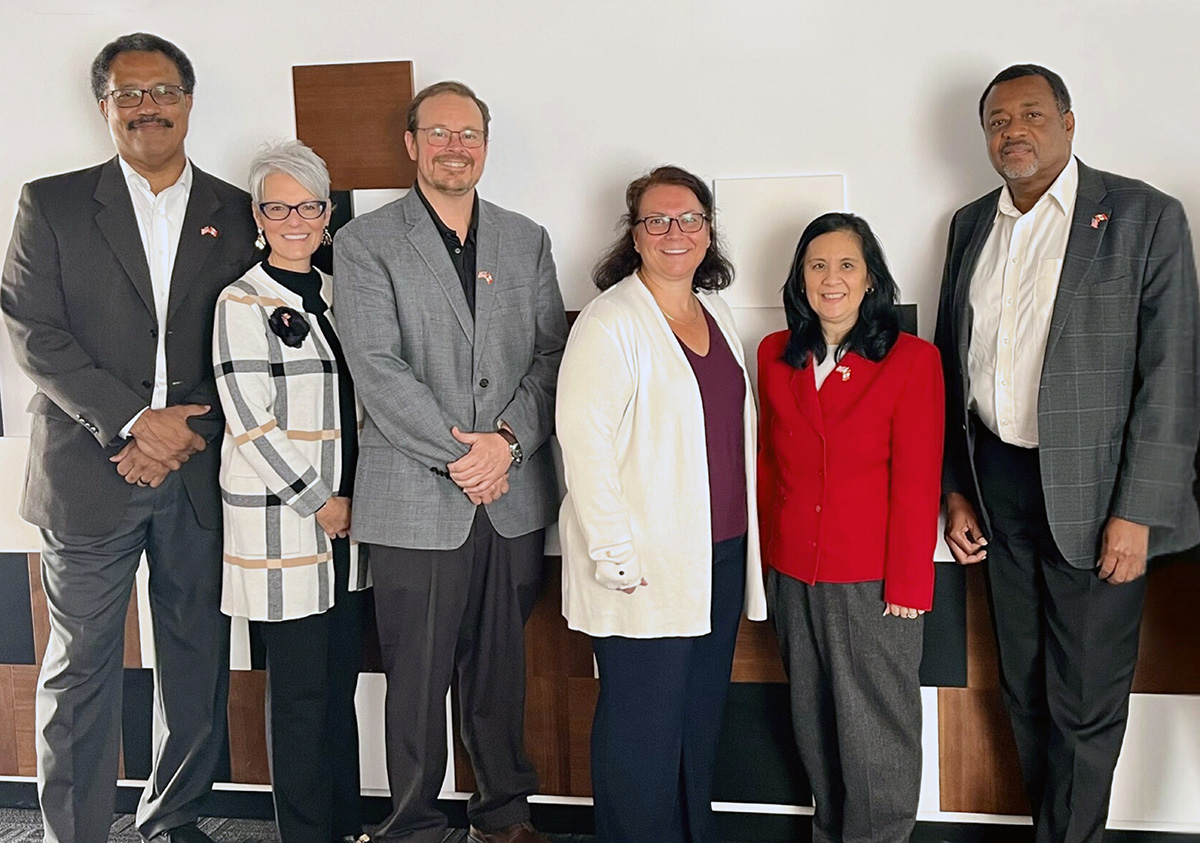
In 2021, a group of Black psychologists and professionals within the Canadian Psychological Association came together to create something that had never existed before - the CPA Section on Black Psychology. Their goal was simple but powerful: to build a home for Black psychological work in Canada, and to make sure that the issues affecting Black people are not just add-ons, but central to how the profession thinks about mental health and wellbeing.
The Section focuses on things like:
- supporting Black psychologists, trainees, and researchers, who are still very few in number across the country
- creating spaces where Black members can share experiences, resources, and strategies without having to explain the basics of racism first
- highlighting research and practice that speaks directly to Black communities’ needs, strengths, and realities
- and pushing the broader discipline to take anti-Black racism seriously, in training, ethics, and everyday practice
Outside of formal psychology, Black-led organizations and community groups have also been stepping in where systems fall short, offering counselling, support groups, workshops, and advocacy that are grounded in Black experiences and priorities. Many of these initiatives blend Western psychological tools with Afrocentric, faith-based, or community-based approaches that feel more natural and trustworthy to the people they serve.
When we talk about “Black psychology” in this way, we mean all of this:
- the everyday wisdom and care that has kept Black people going
- the growing body of Canadian research and clinical work that puts Black experiences at the centre
- and the organized efforts, like the CPA Section on Black Psychology and Black-led mental health initiatives, that are trying to shift the field from the inside out.
Black psychology doesn’t deny the harm that racism causes. It names it clearly - sometimes in the language of trauma, stress, depression, or anxiety, and sometimes in the language of exhaustion, anger, numbness, or “just trying to get through the week.”
But it doesn’t stop there.
It also pays attention to:
- Black joy: the moments of laughter, play, and celebration that are not naive, but defiant
- Black connection: the friendships, kinship networks, and chosen families that catch them when systems fail
- Black creativity and spirituality: the art, music, style, and faith that allow people to express pain and hope at the same time
- Black possibility: the determination to imagine better futures, not just for individuals, but for whole communities
Seen through this lens, Black people are not just people to be helped. They are also people who are constantly helping each other, and who have a great deal to teach psychology about resilience, community care, and what healing can look like.
Next, we’ll look more closely at psychology’s part in the problem and the solution: how the field has sometimes reinforced the very systems that harm Black people, how it has sometimes helped to challenge them, and what needs to change now if Black people are truly going to belong in Canadian psychology and in Canadian life.
Psychology’s part in the problem - and in the solution
If psychology is going to help us understand why racism keeps coming back, we also have to be honest about psychology’s own history.
Our field is not standing outside the story, looking in. It has always been part of the story.
When psychology has done harm
For a long time, most of the people designing psychological tests, doing research, and writing textbooks were White men. They often took their own experiences as normal, and measured everyone else against that yardstick.
That showed up in harmful ways.
Intelligence tests, for example, were developed and used in school systems and workplaces with the assumption that they were neutral and objective. In reality, they were built around the language, culture, and life experiences of White, middle-class children. When Black children scored lower - not because they were less intelligent, but because the tests weren’t built for them - those scores were used as proof that they didn’t belong in advanced classes or academic tracks.
Similar patterns surfaced in research on behaviour and mental health:
- Black anger at racism could be labeled as “aggression”.
- Black distrust of systems that had repeatedly failed them could be labeled as “paranoia”.
- The strain of surviving constant discrimination could be overlooked, while any sign of distress was quickly pathologized.
In each case, the lens was tilted. Instead of asking, “What is this person responding to?” the question became, “What is wrong with this person?”
The result was that psychology sometimes helped justify unequal treatment, instead of questioning the conditions that made people suffer in the first place.
Even when psychologists weren’t actively pushing racist ideas, many were silent. Silence can be comfortable for those who benefit from the status quo. But for those on the receiving end of racism, silence feels like agreement.
That’s not the whole story either.
When psychology has helped
There have been moments when psychological research has helped bring the realities of racism into focus in ways that were hard to ignore.
Studies have given language and evidence to experiences Black communities have talked about for generations.
- internalized racism - how growing up in a world that devalues Blackness can affect how Black children see themselves
- stereotype threat - how the fear of confirming negative stereotypes can affect performance at school or work
- microaggressions - the everyday slights and comments that send the message “you don’t belong here”
- racial trauma – the deep, ongoing impact of racism on mental and physical health
Black psychologists and allies have used these tools to challenge policies, to change how services are delivered, and to argue for approaches that take racism seriously, rather than treating it as background noise.
In other words, the same field that once helped prop up racist ideas has also been used to expose them and to push for change.
What needs to change now
In Canada today, psychology sits at a crossroads.
We know more than ever about how racism harms mental health. We know that colorblind approaches don’t work. We know that ignoring race doesn’t make inequality disappear, it just makes it harder to address.
The question is: what do we do with that knowledge?
Some of the changes needed are big and structural; others are small and everyday. All of them matter.
- Training and education
If you are training to be a psychologist in Canada, learning about Black mental health and anti-Black racism should not be an optional add-on. It should be woven throughout your courses, your readings, your case discussions, and your supervision. Students need support to reflect on their own identities and biases, and to learn how to talk about racism with clients in ways that are honest, respectful, and helpful.
- Services and settings
When Black children, youth, adults, or elders walk into a clinic, a school counselling office, or a hospital, they should not have to spend time explaining the basics of racism. Services should be designed with Black communities in mind, from who is on staff, to how intake questions are asked, to what “normal” is assumed to look like. That includes taking seriously the ways racism shows up in people’s lives, without reducing Black people to their trauma.
- Research and knowledge
Black researchers and communities should be leading work on Black mental health in Canada, not just participating in studies designed by others. Research questions should be grounded in what Black communities say they need, not just in academic trends. Methods should include community voices at every step, and the results should be shared back in ways that are actually useful to those communities. There should be continuous, dedicated national funding to support research dedicated to advancing the well-being of Black Canadians.
- Organizations and leadership
Professional bodies like the Canadian Psychological Association have a role to play too. It’s not enough to make one-time statements about diversity or put up a Black History Month post. Supporting sections like Black psychology, taking seriously concerns raised about equity and inclusion, examining who sits at decision-making tables, and being willing to change policies and priorities - all of that is part of the work.
None of this will be easy. It asks people and institutions to move beyond comfort, to sit with the fact that good intentions are not enough, and to let go of the idea that being “nice” or “polite” is the same as being just.
But if psychology is truly about understanding people and helping them live fuller lives, then facing these questions is not an extra. It is central to the job.
Belonging, on purpose
We started this article by talking about walking into a room and wanting to feel like we belong there.
For Black people in Canada, too many rooms have sent the opposite message, in ways big and small. Sometimes it has been obvious: doors literally closed, seats taken away, services denied. Sometimes it has been quiet: being overlooked, second-guessed, or treated as an exception rather than as part of the story.
Psychology gives us language for some of this. It helps us see the habits, fears, and stories that keep unfair systems going. Black psychology goes further, naming the toll this takes on Black minds and bodies, and also highlighting the strength and creativity Black communities bring to the work of surviving and changing those systems.
But naming things is only the first step.
If we want something different for the future - for Black children sitting in classrooms, for Black parents navigating health and school systems, for Black elders carrying long memories - we cannot just hope that time will fix it. The past few decades have shown us that time alone does not undo racism. It simply gives it new shapes.
Belonging will not happen by accident. It has to be built on purpose.
For psychology, that means asking some hard questions:
- Who are we picturing when we imagine “the client,” “the student,” “the researcher,” or “the psychologist”?
- Whose comfort are we protecting when we avoid talking about race?
- Whose knowledge are we treating as expertise, and whose are we treating as anecdote?
- When Black people tell us what they are experiencing, are we listening as carefully as we should?
It also means making different choices:
- choosing to see patterns instead of treating each incident as an isolated misunderstanding
- choosing to stay in difficult conversations a little longer, rather than shutting down
- choosing to design training, services, and research with Black communities in mind from the beginning, not as an afterthought
For those of us who are Black and working in or with psychology, this work can be both heavy and hopeful. Heavy, because we are often carrying our own experiences and those of our families and communities while also trying to shift systems that did not expect us to be there. Hopeful, because we know what it would mean for our children and our students if things were different, and because we see examples, every day, of Black brilliance breaking through.
For those who are not Black, there is an invitation here too.
It is an invitation to move beyond guilt or defensiveness into responsibility; to use your roles, as clinicians, supervisors, faculty members, leaders, students, policy-makers, to make room for truths that may be uncomfortable, but necessary. It is an invitation to see anti-Black racism not as a side issue, but as something that goes to the heart of whether psychology is living up to its promise.
We cannot rewrite Mary Bibb’s classrooms or Viola Desmond’s night at the theatre. We can, however, decide what comes next.
We can decide that Black children will not have to leave pieces of themselves at the school door in order to be seen as “good students.”
We can decide that Black clients will not have to weigh the cost of naming racism in therapy against the risk of being misunderstood.
We can decide that Black psychologists, trainees, and researchers will not be rare exceptions, but part of a profession that truly reflects the communities it serves.
Honouring Black history in Canada means more than looking back at moments of courage once a year. It means letting those stories change how we see ourselves, our institutions, and our responsibilities right now. Psychology has tools that can help us do that. Black psychology is already pointing the way.
The question, for all of us, is whether we are willing to use what we know: to notice when the old rules are creeping back in, to choose different responses, and to help build a future where Black people don’t just appear in the room, but can finally trust that the room was made with them in mind.
This is how we will help to build a future where Black people don’t just appear in the room, but can finally trust that the room was made with them in mind.